
“Open” and “wide-bore” are the words patients bring up most when they’re nervous about an MRI. The honest version is that scanner shapes matter, but so does the body part you’re imaging, and the marketing around these machines doesn’t always match reality. Here’s the plain version.
What the Terms Mean
A traditional closed MRI is a long tube. The magnet surrounds you completely, and for studies like a brain or cervical spine, your head goes fully inside. A wide-bore scanner is a closed system with a larger opening — typically wider and often a bit shorter than the old machines. An open MRI has the magnet above and below, with the sides open, so you can see out.
All three produce usable images. The trade-offs are image quality and scan capability. Open machines use weaker field strengths in most cases, which means some studies aren’t offered on them at all. Closed and wide-bore systems at the same field strength generally produce sharper, more consistent images.
What We Actually Use
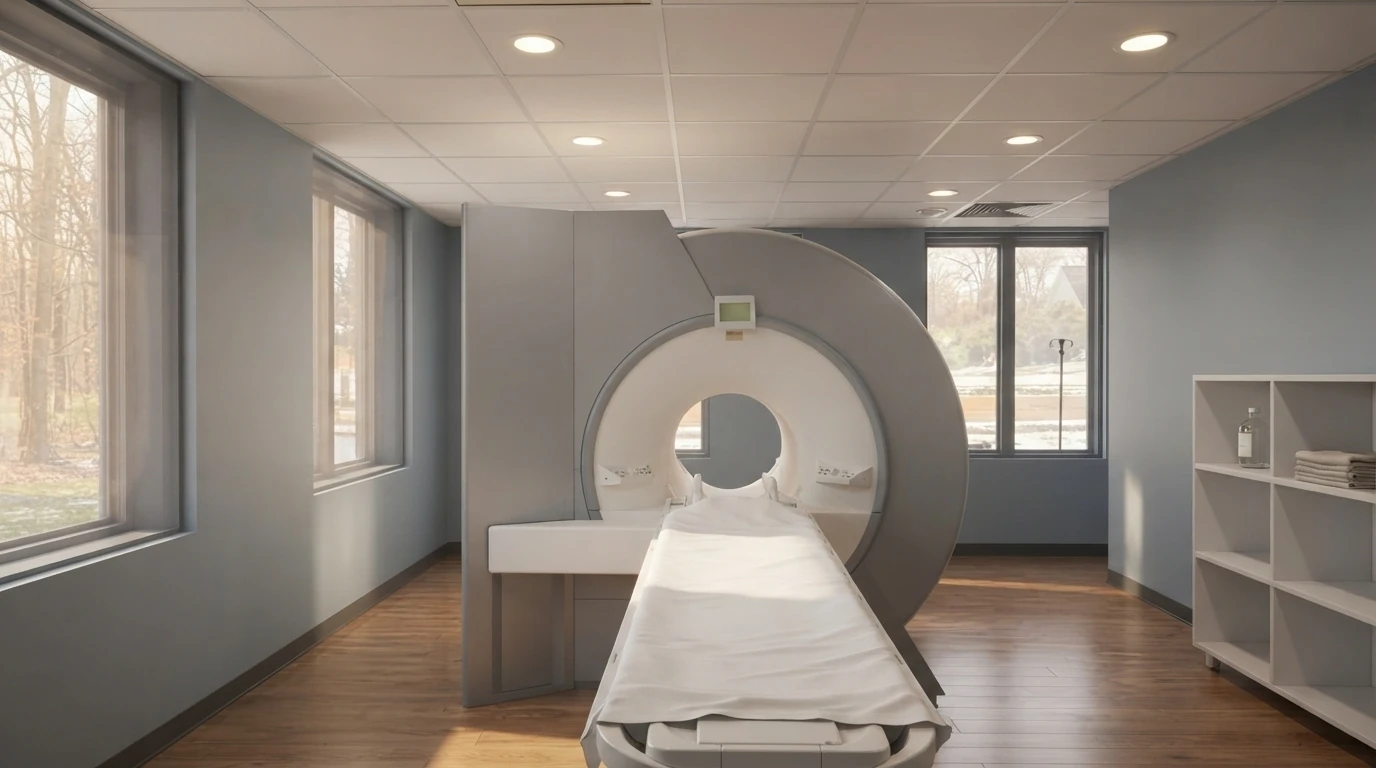
We’re honest about our equipment because you deserve to know before you pay. We scan on a Siemens 1.5T with a short bore. It is not a full wide-bore system, and we won’t pretend otherwise. What a short bore means in practice: the tube is noticeably shorter than a traditional closed MRI, so less of you is inside the machine, and most patients find it easier to handle.
That’s the design choice that matters more than the label. A long closed tube can feel like lying in a cave for 25 minutes. A short bore gets you the image quality of a closed system with a setup that feels less confining. If claustrophobia is your concern, this is the machine you want to ask about.
One thing we won’t do is talk you into a machine that doesn’t fit the study. If your scan needs your head in the bore, that’s how it works regardless of the scanner, and we’d rather prepare you for it than sell you a story about an open scanner that never arrives. The machine is a tool; what matters is that it’s the right tool for your study and that you know what’s coming.
What to Ask For if You’re Claustrophobic
If you’re worried about tight spaces, the first question isn’t just “is it wide.” It’s “can I go in feet first, and will my head stay outside?” For many common studies, the answer is yes. A lumbar spine, knee, hip, or ankle MRI all go in feet first, with your head outside the opening for the majority of the scan. Those are the easiest studies for anxious patients, and we run them constantly.
Some studies genuinely need your head in the machine. A brain MRI uses a coil around your head, and you’re inside the bore for the full study — that’s just physics. For those, being honest about what to expect matters more than any machine spec. We’ll talk you through it before the appointment, keep you talking through the speakers during the scan, and give you a call button so you’re never stuck.
What to Ask Any Facility
Whether you come to us or scan elsewhere, ask these three things before you book: what field strength is the machine, how much of my body will be inside the bore, and will I be feet first or head first for my study. The answers tell you more than the words “open” or “wide-bore” ever will.
Our FAQs page covers claustrophobia and a few other common questions. And if you’d rather just talk it through with a person, call us at (314) 834-7226 — we’re used to first-timers, and we’ll tell you straight whether our setup is a good fit for your study.