
If your doctor has ordered an imaging test, the names get thrown around fast: X-ray, CT, MRI. They all make pictures of the inside of your body, but they’re different tools built for different questions. Here’s the plain-language version of what each one is, when it’s used, and what it costs.
X-Ray: Fast, Cheap, Bones
An X-ray is the workhorse. It’s quick, widely available, and inexpensive, and it’s excellent at showing bones and certain chest and joint problems. That’s why it’s almost always the first imaging test for a sore joint or a suspected fracture. Its limits are real: it can’t show soft tissue — the discs, ligaments, tendons, and internal organs where many problems actually live. And it does use a small amount of radiation.
CT: Cross-Sections, Speed, Trauma
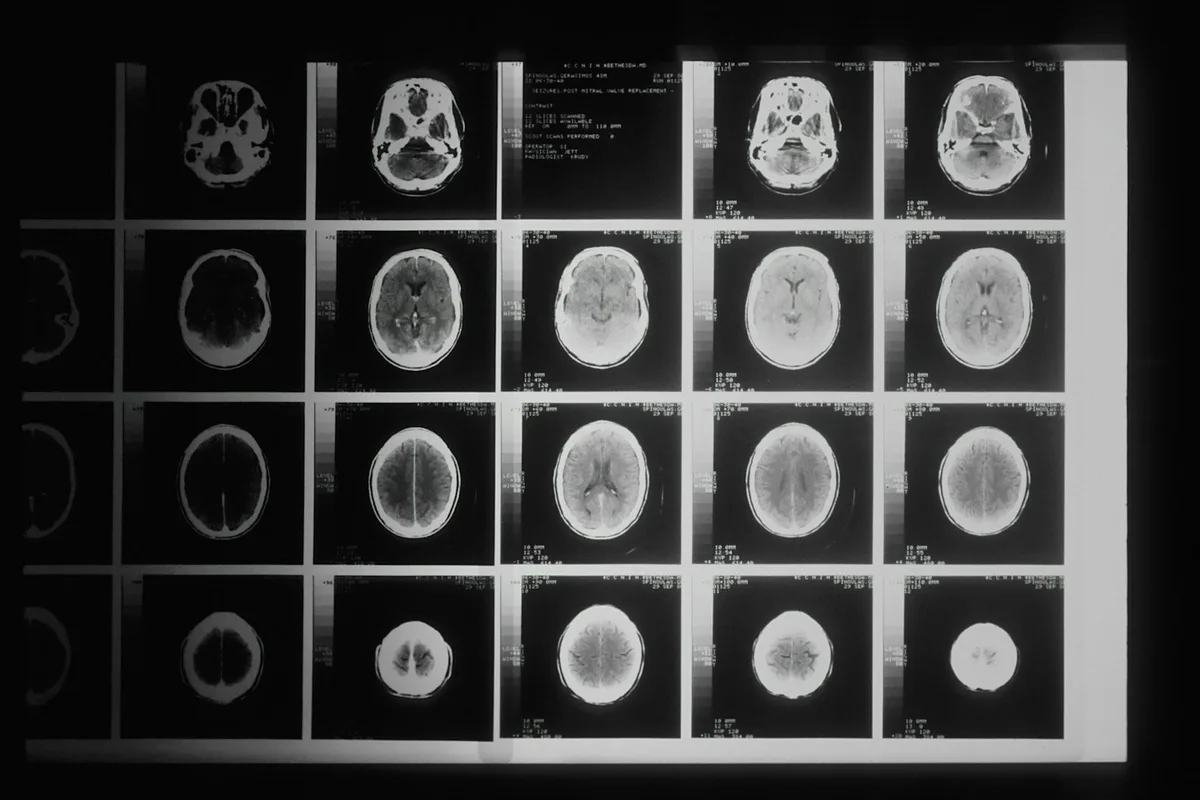
A CT scan (computed tomography) uses X-rays from multiple angles to build detailed cross-section images. It’s much better than a plain X-ray at showing bones in three dimensions, the lungs, and the organs of the chest and abdomen. It’s also fast — a whole scan can take minutes — which makes it the go-to in trauma and emergency settings. The trade-off is that it uses more radiation than a single X-ray, and for soft tissue detail, MRI is often better.
MRI: Soft Tissue, No Radiation
MRI uses a strong magnetic field and radio waves — no X-rays, no radiation at all. It’s the best of the three at showing soft tissue: the spinal discs and nerves, the meniscus and ligaments of a knee, the rotator cuff, the brain and spinal cord. That’s why it’s the standard study for chronic joint and spine problems, persistent neurological symptoms, and anything where X-ray or CT came back unclear. It’s also why spine and joint surgeons want it before they operate — they need to see the structures a plain X-ray can’t show.
The traditional downsides are time and cost. A scan runs 25–30 minutes instead of seconds, and historically MRI was priced accordingly. That’s changing — our pricing page shows a flat $399 per scan, which changes the calculus for a lot of patients.
Which One Do You Need?
That’s a question for your doctor, and the honest answer is that different tests answer different questions:
- An X-ray first for a suspected fracture or joint arthritis.
- A CT for trauma, or for bones and lungs in detail.
- An MRI when the question is soft tissue — discs, ligaments, tendons, or the brain.
The one universal rule: more expensive imaging isn’t automatically better for your question. A simple X-ray is the right test for many problems, and we’ll tell you that straight if you ask. And if you’ve already had one of these tests recently, ask whether another one will actually change the plan before you agree to it — repeat imaging should have a reason.
What Each One Costs
Cost follows the same logic as the imaging itself. X-ray is the cheapest, CT sits in the middle, and MRI has traditionally been the most expensive of the three, which is why it was reserved for questions the others couldn’t answer. That’s changing. At Sunset Hills Imaging, every non-contrast MRI is a flat $399, which makes the cost difference between these tests much smaller than it used to be. The choice between them should be driven by what the doctor is looking for, not by price — but if price is part of your decision, it’s now a real factor rather than the deciding one.
The full list of what we scan is on our services page, and common questions — including contrast, insurance, and what the $399 covers — are on our FAQs page.